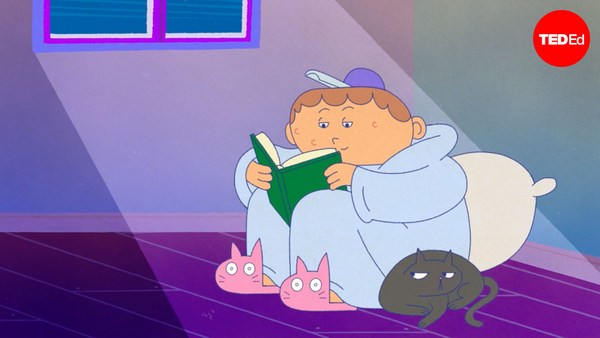
It's 6:00 in the morning, pitch black outside. My 14-year-old son is fast asleep in his bed. I flip on the light and physically shake the poor boy awake. because I know that, like ripping off a Band-Aid, it's better to get it over with quickly.
Sound brutal, but perhaps familiar? Every morning I ask myself, how can I, knowing what I know, be doing this to my own son? You see, I’m a sleep researcher. So I know that I’m depriving my son of sleep he desperately needs as a rapidly growing teenager. I also know that by waking him up hours before his natural biological clock tells him he’s ready, I’m literally robbing him of the type of sleep most associated with learning, memory consolidation, and emotional processing.
But it's not just my kid that's being deprived of sleep. Sleep deprivation among American teenagers is an epidemic. Only about 1 in 10 gets the 8 to 10 hours of sleep per night recommended by sleep scientists and pediatricians. The major factor preventing teens from getting the sleep they need is a matter of public policy.
Across the country, many schools are starting around 7:30 a.m. or earlier, despite the fact that major medical organizations recommend that middle and high schools start no earlier than 8:30 a.m. These early start policies have a direct effect on how little sleep American teenagers are getting. They’re also pitting teenagers in a fundamentally unwinnable fight against their own bodies.
Around the time of puberty, teenagers experience a delay in their biological clock, which determines when we feel most awake and when we feel most sleepy. This is driven in part by a shift in the release of the hormone melatonin. Teenagers’ bodies wait to start releasing melatonin until around 11 p.m., which is two hours later than what we see in adults or younger children.
This means that waking a teenager up at 6 a.m. is the biological equivalent of waking an adult up at 4 a.m. Now, on the unfortunate days when I have to wake up at 4 a.m., I’m a zombie. Functionally useless. I can't think straight. I’m irritable, and I probably shouldn’t be driving a car. But this is how many American teenagers feel every single school day.
Many of the, shall we say, unpleasant characteristics that we chalk up to being a teenager— moodiness, irritability, laziness, depression— could be a product of chronic sleep deprivation. For many teens battling chronic sleep loss, their go-to strategy to compensate is consuming large quantities of caffeine in the form of venti Frappuccinos, or energy drinks and shots. So essentially, we've got an entire population of tired but wired youth. Advocates of sleep-friendly start times know that adolescence is a period of dramatic brain development, particularly in the parts of the brain that are responsible for those higher order thinking processes, including reasoning, problem solving, and good judgment. In other words, the very type of brain activity that’s responsible for reining in those impulsive and often risky behaviors that are so characteristic of adolescence. They know that, like the rest of us, when teenagers don’t get the sleep they need, their brains, their bodies, and behavior suffer. They can't concentrate. Their attention plummets, and many will even show behavioral signs that mimic ADHD. But the consequences of teen sleep loss go well beyond the classroom, sadly contributing to many of the mental health problems that skyrocket during adolescence.
In our work with teens from LA Unified School District, we found that teens with sleep problems were 55% more likely to have used alcohol in the past month. In another study with over 30,000 high school students, they found that for each hour of lost sleep, there was a 38% increase in feeling sad or hopeless, and a 58% increase in teen suicide attempts.
And if that's not enough, teens who skimp out on sleep are at increased risk for a host of physical health problems that plague our country, including obesity, heart disease, and diabetes. Then there’s the risk of putting a sleep-deprived teen behind the wheel. Studies have shown that getting five hours or less of sleep per night is the equivalent of driving with a blood alcohol content above the legal limit.
Researchers in this area have produced tremendous science showing the benefits of later start times. The findings are unequivocal. Teens from districts with later start times get more sleep. They're more likely to show up for school. School absences dropped by 25% in one district, and they're less likely to drop out. Not surprisingly, they do better academically. Standardized test scores in math and reading go up by 2 to 3 percentage points. That's as powerful as reducing class sizes by one third fewer students. Their mental and physical health improves, and their families are happier. Even their communities are safer because car crash rates go down— a 70% reduction in one district. Now, given these tremendous benefits, you might think, well, this is a no brainer, right? So why have we as a society failed to heed this call?
Delaying start times presents many logistical challenges. Updating bus routes, increased transportation costs, impact on sports. Care before or after school. But these are problems we have to work through. They are not valid excuses for failing to do the right thing for our children, which is to start middle and high schools no earlier than 8:30 a.m. Districts around the country, big and small, who have made this change, they’ve found that these fears are often unfounded and far outweighed by the tremendous benefits for our student health and performance and our collective public safety.