In autumn 2007, a Tuscan father and son unearthed one of the largest white truffles ever found. It later sold at auction for a record-breaking $330,000— more than six times the price of its weight in gold at the time.
Truffles are one of the world’s most expensive foods— in part because global demand often outstrips supply. But why are truffles so rare? And why don't we just farm more of them?
The answers lie in the truffle’s unique and somewhat mysterious biology.
Truffles refer to nearly 200 species of fungi, of which around 30 are used in commercial trade. The most sought-after truffles are native to Europe, confined to regions with lime-rich dry soil and light summer rains. Each species grows under the canopy of specific trees, where they form tight symbiotic relationships. A truffle’s mycelium, the vegetative root-like structure of the fungus, wraps itself around the tree roots and swaps water and nutrients for sugars.
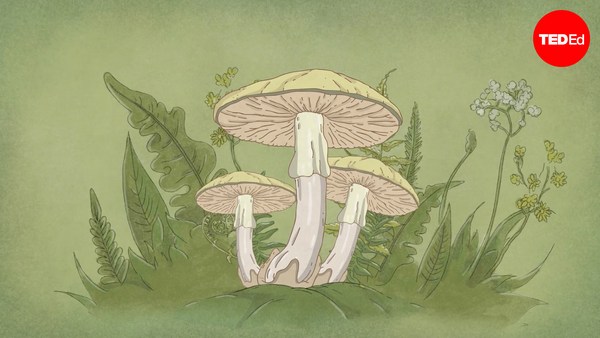
While truffles themselves aren’t mushrooms, the parts of truffles we covet are, like mushrooms, the fruiting body of the fungus. But while mushrooms grow above ground, allowing their spores to be dispersed by both wind and foraging animals, truffles grow entirely below the soil. So, they release a powerful aroma to lure hungry forest animals to come to do their spreading. If these animals happen to drop these spores near the roots of a particular type of tree, only then might a truffle develop, several years later.
This pungent aroma is also what’s made truffles alluring to humans. In fact, much of what we perceive as truffle flavor comes from its unique scent. A single species typically emits 30 to 60 different volatile compounds, which are produced by both the truffle and the bacteria and yeast that colonize them.
But despite their scent, finding these subterranean gems within a dense forest is far from easy. As early as the 1400s, Europeans used pigs as truffle-finding companions. Truffles emit dimethyl sulfide, a compound that reeks of cabbage, which helps draw the pigs in. But when a pig finds a truffle, they’re apt to take a bite out of the profit. So many truffle hunters began replacing pigs with dogs who, while not natural-born truffle hunters, are more easily trained. Meanwhile, others learn to track their prize by following species of flies that are known to lay their eggs near truffles.
Nevertheless, today, the global market still demands more truffles than any pig, dog, or fly can sniff out. And truffles continue to grow even rarer— and more expensive— as deforestation and climate change shrink their suitable terrain. So why don't we just farm them?
We do, to some extent. In 1808, a French farmer became the first to cultivate truffles when he planted acorns under truffle-bearing oaks, and then transplanted the seedlings with— unknowingly at the time— some fungi companions. By the early 1970s, scientists cracked how to artificially inoculate tree seedlings, which allowed growers to sow certain species of truffles in orchards far outside their native range.
However, truffles are still not considered a domesticated crop. There are just too many unknowns, as researchers are still working out the precise temperature, precipitation, elevation, soil pH, and other environmental factors that determine a truffle orchard’s success.
Part of the problem is that truffles need to mate to form that valuable fruiting body, yet truffles sex is still largely a mystery. Researchers know that these fungi are hermaphrodites that cannot reproduce alone. So, when a truffle reproduces, one fungus takes on the maternal role and the other the paternal role, each contributing half of the genes that will form the spores. However, when researchers search the area near a truffle fruiting body, they only ever find maternal mycelium. Where the paternal partner lives— or hides— remains unknown.
So each time a hopeful truffle enthusiast begins a new farm, there’s no guarantee truffles will grow, and they'll have to wait four years or more to find out. But many take the gamble, as growers know that if they’re patient and lucky, they might just dig up gold.