TED-Ed: How do we create a better economy?
Can we call any economy "healthy" in the face of dwindling resources and growing inequality? What if we cut off our addiction to endless growth, and used a new compass for modern prosperity? One such compass is known as "doughnut economics," which aims to meet the needs of people without overshooting Earth's ecological limits. Explore how this m...
TED-Ed: 3 ways to end a virus
Viruses are wildly successful organisms. There are about 100 million times as many virus particles on Earth as there are stars in the observable universe. Even so, viruses can and do go extinct. So, what is the possibility of the virus that causes COVID-19 going extinct? Explore the three main ways viruses can be driven to extinction. [Directed ...
TED-Ed: How to manage your emotions
After a week of studying, you feel confident that you'll ace your exam. But when you get your grade back, it's much lower than you expected. You're devastated, and the disappointment is hard to shake. Should you be trying to look on the bright side? And is controlling your emotions even possible? Explore techniques to help you identify, understa...
TED-Ed: What's the best country to live in?
What's the best country to live in? Is it the one with the best food? The longest life expectancy? The best weather? For the past 70 years, most governments have relied heavily on a single number: the Gross Domestic Product, or GDP. But it was never intended for its current purpose; and some argue that we are addicted to making it grow. Explore ...
TED-Ed: Why good ideas get trapped in the valley of death -- and how to rescue them
All new products must pass through the "valley of death" before they reach the market. Many never make it out, and sometimes that's OK -- if they don't work, don't fill a need or for any number of reasons. One of the fields where this problem is most pressing is zero-carbon technologies. Why is it vulnerable to this trap, and can we change it? E...
TED-Ed: Do you have what it takes to freelance?
A 2016 survey of freelancers in six countries found that those who freelance by choice– 70% of respondents– were happier than people in traditional jobs, specifically when it came to things like independence and flexibility in terms of where and when they work. So what does it take to be a successful freelancer? Explore the benefits and drawback...
TED-Ed: Can the economy grow forever?
Many economists think that an eternally growing economy is necessary to keep improving people's lives, and that if the global economy stops growing, people would fight more over the fixed amount of value that exists, rather than working to generate new value. Which raises the question: is infinite growth possible on a finite planet? Explore how ...
TED-Ed: A brief history of plastic
For centuries, billiard balls were made of ivory from elephant tusks. But when excessive hunting caused elephant populations to decline, they began to look for alternatives. John Wesley Hyatt took up the challenge. In five years, he invented a new material called celluloid, which would become known as the first plastic. Trace the history of the ...
TED-Ed: What's the best fuel for your car?
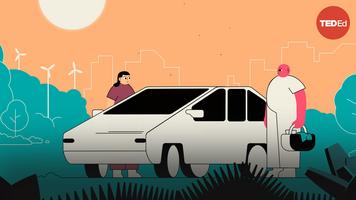
Historically, most cars have run on gasoline, but that doesn't have to be the case in the future: other liquid fuels and electricity can also power cars. So what are the differences between these options? And which one's best? Dig into which fuel— gasoline, electric, biofuels, or electrofuels— is both affordable for consumers and sustainable for...
TED-Ed: How scientists turn lakes into giant batteries
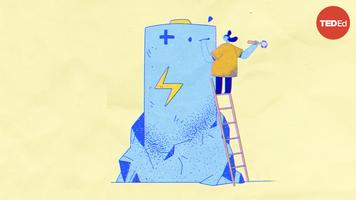
As of 2020, the world's biggest lithium-ion battery is hooked up to the Southern California power grid and can provide enough power for about 250,000 homes. But it's actually not the biggest battery in the world: a pair of lakes are. How can lakes be a battery? Explore how inventors are rethinking what a battery can be, and how these surprising ...
TED-Ed: Would you pass the wallet test?
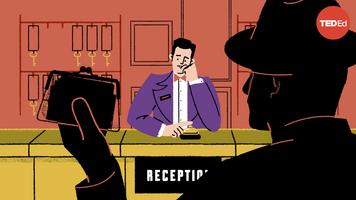
Picture this: you're working a shift in a hotel lobby when someone approaches the front desk. They found a lost wallet around the corner, but they're in a rush and don't have time to follow up. Looking at the wallet you see it contains a key, grocery list, about $13, and three business cards you assume belong to the wallet's owner. So, what do y...
TED-Ed: Will there be another pandemic in your lifetime?
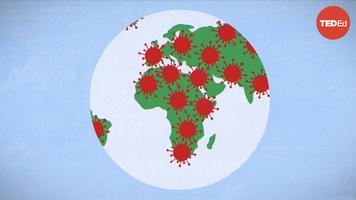
We tend to think of pandemics as unlikely events, but disease outbreaks are surprisingly common. Over the past 400 years, the longest stretch of time without a documented outbreak was just four years. So, what's the probability of experiencing another world-changing pandemic in your lifetime? Explore the likelihood of a future pandemic and the s...
TED-Ed: 4 things all great listeners know
It's easy to tell when someone's not paying attention, but it can be surprisingly tricky to know what good listening looks like. Good listening is one of the most important things we can do to improve our relationships, develop our worldview, and potentially change people's minds. So what can we do to become better listeners? Dig into different ...
TED-Ed: The "myth" of the boiling frog
Since 1850, global average temperatures have risen by 1 degree Celsius. That may not sound like a lot, but it is. Why? 1 degree is an average. Many places have already gotten much warmer and if average temperatures increase one more degree, the coldest nights in the Arctic might get 10 degrees warmer. So how did we get here? And what can be done...
TED-Ed: How to make smart decisions more easily
Everything our bodies do— whether physical or mental— uses energy. Studies have found that many individuals seem to have a daily threshold for making decisions, and an extended period of decision-making can lead to cognitive exhaustion. So, what kinds of choices lead us to this state, and what can we do to fight fatigue? Explore the psychology o...
TED-Ed: Is capitalism actually broken?
People have become increasingly worried that the threats we face today, like climate change and rising inequality, can't be solved by a capitalist economic system. So, is that true? And if it is, can we fix capitalism or do we need to tear the system down and build a new one from scratch? Explore the different types of capitalism and the role it...
TED-Ed: Why is it so hard to break a bad habit?
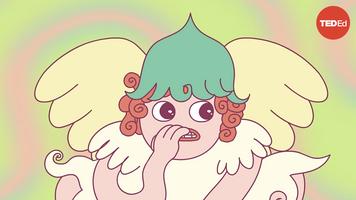
Many people deal with a nail-biting habit at some point in their lives. Some will go to great lengths to try to stop, employing strategies like dipping their hands in salt or wearing gloves. And while not all of us are nail-biters, most of us do have a habit we'd like to kick. So, what's the best way to break one? Explore how habits are formed, ...
TED-Ed: Is it normal to talk to yourself?
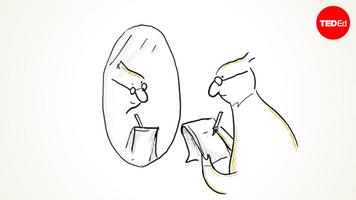
Being caught talking to yourself can feel embarrassing, and some people even stigmatize this behavior as a sign of mental instability. But decades of research show that talking to yourself is completely normal; most if not all of us engage in some form of self-talk every day. So why do we talk to ourselves? And does what we say matter? Dig into ...
TED-Ed: Is AI the most important technology of the century?
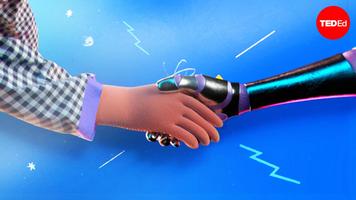
Is it possible that this century is the most important one in human history? The 21st century has already proven to be a period of rapid growth. We're on the cusp of developing new technologies that could entirely change the way people live— and could contribute to unprecedented levels of existential risk. Explore how the decisions we make now m...
TED-Ed: Why plague doctors wore beaked masks
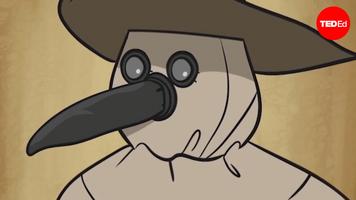
The year is 1656. Your body is wracked by violent chills. Your head pounds and you're too weak to sit up. In your feverish state, you see a strange-looking man wearing a beak-like mask, his body covered from head to toe. Without seeing his face, you know: you have the plague. So, where did these iconic outfits come from? Stephanie Honchell Smith...
TED-Ed: Why you procrastinate even when it feels bad
The report you've been putting off is due tomorrow. It's time to buckle down, open your computer ... and check your phone. Maybe watch your favorite YouTube channel? Or maybe you should just start in the morning? This is the cycle of procrastination. So, why do we procrastinate when we know it's bad for us? Explore how your body triggers a procr...
TED-Ed: These companies with no CEO are thriving
Co-ops are a big part of the global economy: they employ 10% of the world's workforce and over two trillion dollars flow through their doors every year. At a co-op, there's no single person with overarching, top-down power over everyone else, like a CEO at a traditional company. So what exactly is a co-op and how does it work? Explore the differ...
TED-Ed: How close can we actually get to the Sun?
In 2021, the Parker Solar Probe achieved its mission to touch the Sun, skimming through its outermost atmosphere. Since then, it’s carved closer and closer paths, but probing deeper into the corona— without melting, exploding, or falling into the Sun— is a monumental engineering challenge. Is it possible? Explore the obstacles of the mission and...
TED-Ed: How will AI change the world?
In the coming years, artificial intelligence is probably going to change your life— and likely the entire world. But people have a hard time agreeing on exactly how AI will affect our society. Can we build AI systems that help us fix the world? Or are we doomed to a robotic takeover? Explore the limitations of artificial intelligence and the pos...
TED-Ed: How much land does it take to power the world?
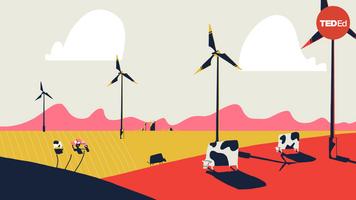
No matter how we make electricity, it takes up space. Coal requires mines, and plants to convert it into electricity. Nuclear power takes uranium mines, facilities to refine it, a reactor, and a place to store the spent fuel safely. Renewable energy needs wind turbines or solar panels. So how much space would it take to power the whole world? Ex...
TED-Ed: Can you change your sleep schedule?
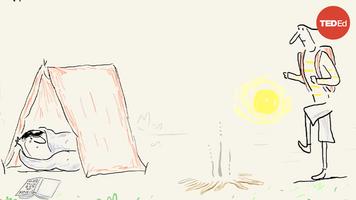
An early bird rises with the sun, springing out of bed abuzz with energy. Meanwhile, a night owl groggily rises much later, not hitting their stride until late in the day. How many people are truly night owls or early birds? And are our sleep schedules predetermined at birth, or can we change them? Explore how our circadian systems act as intern...
TED-Ed: The material that could change the world ... for a third time
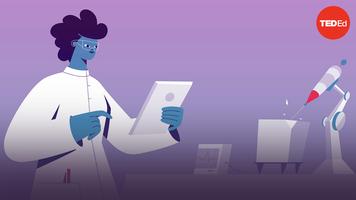
Today roads, sidewalks, bridges and skyscrapers are made of a material called concrete. There's three tons of it for every person on earth. It's also played a surprisingly large role in rising global temperatures over the last century. So, what exactly makes concrete problematic, and what can we do to fix it? Explore how scientists are working t...
TED-Ed: How to deal with rejection
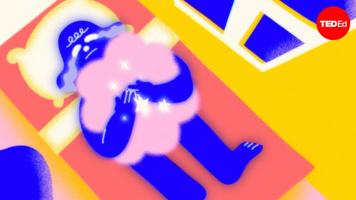
Rejection hurts. It's incredibly painful to feel like you're not wanted — and we do mean painful. Researchers found that we relate rejection to being "hurt," using terms like "crushed" or "broken-hearted." So, why does rejection trigger such a strong response, and is there any way to cope with this unique kind of pain? Explore common strategies ...
TED-Ed: Why is it so hard to cure the common cold?
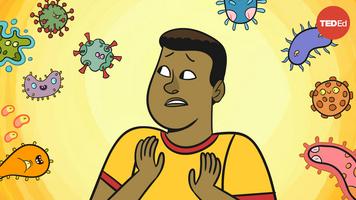
On average, adults catch more than 150 colds throughout their lives. Even with similar symptoms, the cause could be different each time. Common colds are caused by at least 8 different families of virus, each of which can have its own subtypes. How can so many different viruses cause the same illness? And is a cure even possible? Explore the two...
TED-Ed: How to overcome your mistakes

People often describe failure as a teachable moment— a necessary stumble on our way to improvement. But learning from our mistakes isn't always easy, especially when those failures are demoralizing, overwhelming, or just downright confusing. So what prevents us from turning our mistakes into mastery? Explore the biggest obstacles of learning fr...